November 18, 2026
Rings with mammoth tusk: the oldest material in the workshop
Mammoth tusk set into wood: a material thousands of years old, sealed under clearcoat. Which ring carries it and how to care for it.
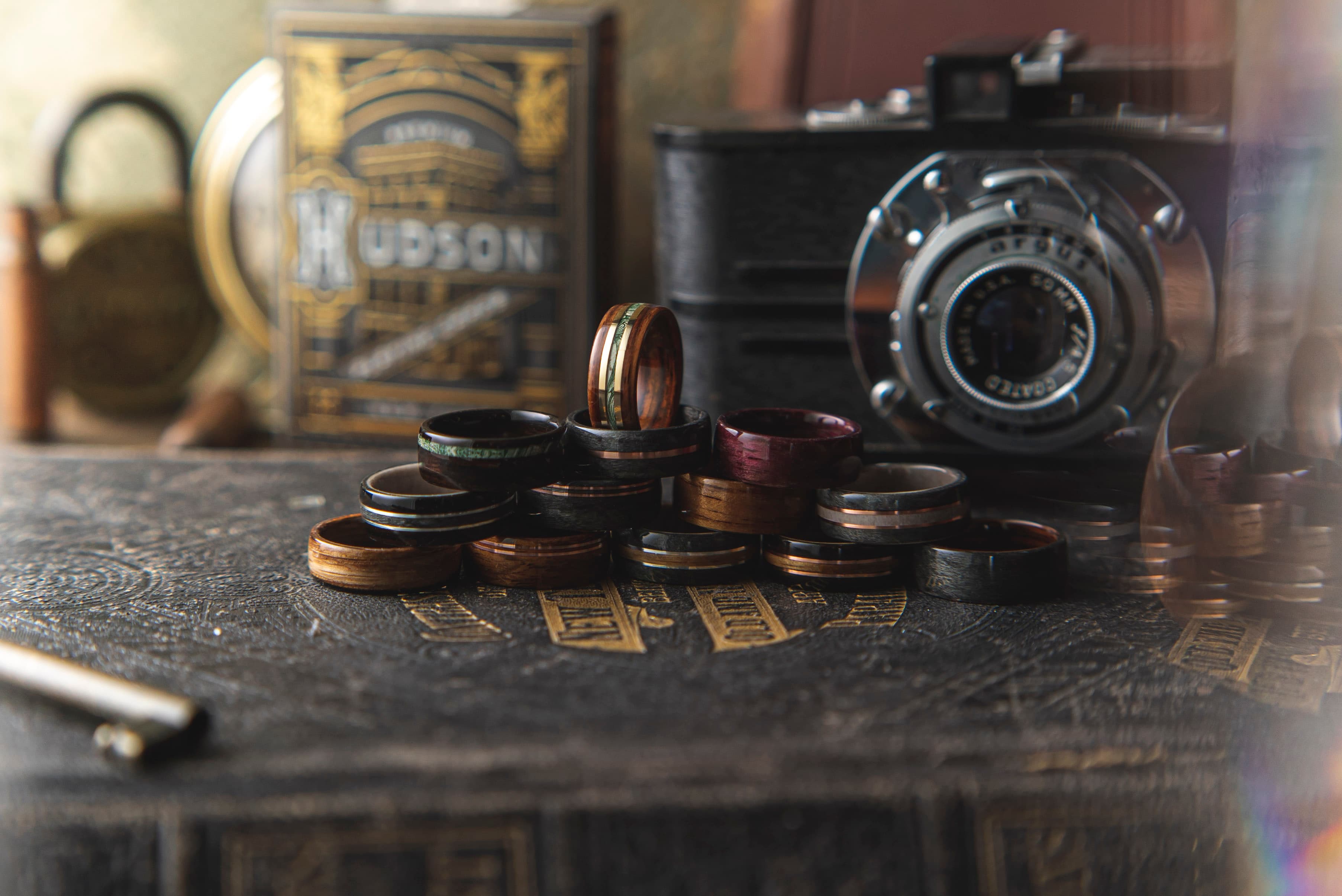
The oldest material
Mammoth tusk is the material with the most years in the workshop. It is not elephant ivory: it is woolly mammoth ivory, extinct thousands of years ago and recovered from permafrost. We set it into wood the same way we set copper, silver, or glass: cut it, place it between layers, seal it under the clearcoat.
How it is set
The ivory is cut into a thin sheet or fine shreds, set into the wood with the bentwood method —vapor-bent veneers wrapped around a core, turned by hand, no CNC— and sealed under the clearcoat. The ivory is protected on both sides: the wood and the clearcoat.
In the catalogue
There is one piece with mammoth tusk in the catalogue, set over bog oak. The ivory-on-dark-wood contrast is where it reads best. Made to order in Mérida, in US sizes.
Care
The ivory needs no separate care: the clearcoat covers and protects it. The ring is waterproof for daily use —hands, shower, pool—. To clean it, water and neutral soap, done.
The order
To order the mammoth-tusk ring, write on WhatsApp or email with the catalogue piece, the width, and the size. The workshop confirms material availability, the quote, and the lead time. Price on request.
Questions in this guide
From woolly mammoths extinct thousands of years ago, recovered from permafrost. It is not elephant ivory; it is a prehistoric material, not a living resource.
Yes, because it is an extinct material and legal. The workshop sets it like any other material: it is cut, placed between wood layers, and sealed under clearcoat.
No in daily use: it sits sealed under the waterproof clearcoat. The clearcoat covers and protects it from scratches, water, and mild chemicals.
One piece, made to order. Price on request.