January 9, 2027
Does a wood ring stain? Sweat, alcohol, and chemicals
The clearcoat protects the wood ring from sweat, alcohol, and common chemicals. What does and does not stain a wood ring, and how to avoid a real stain.
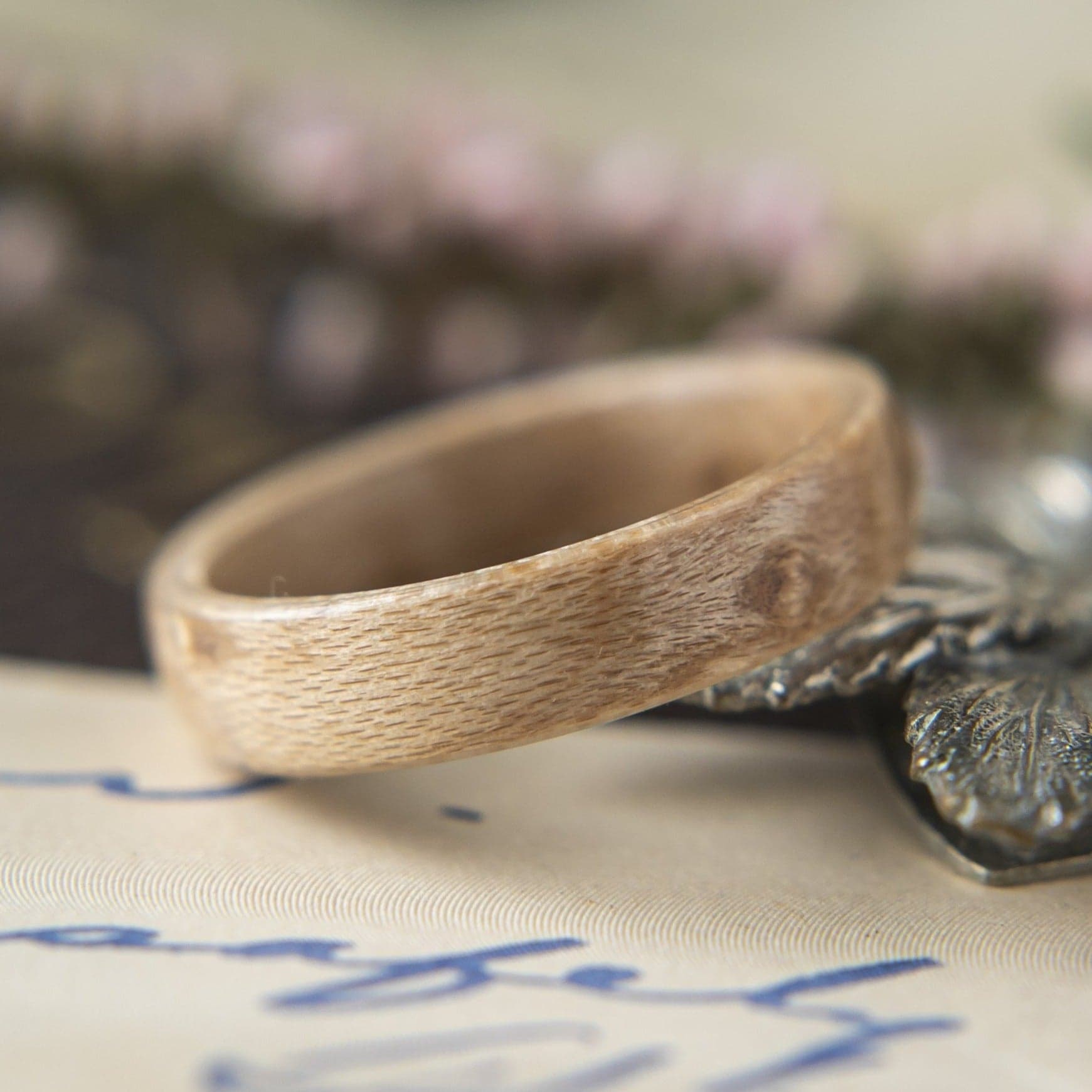
What does not stain
El barniz protege la madera de:
- Sweat. Daily contact with sweat does not penetrate the surface.
- Water. Wet hands, shower, swimming pool. The clearcoat seals it all.
- Soap and shampoo. Short contact with common cleaning products does not affect the clearcoat.
- Food. Contact with food does not stain the sealed wood.
What can damage it
Tres cosas sí afectan el barniz:
- Acetone and solvents. Dissolve the clearcoat in minutes.
- Concentrated chlorine. Repeated pool use can delaminate the clearcoat over the years.
- Hand sanitizer gel. The alcohol in the gel, applied repeatedly, eats into the clearcoat.
How to avoid a real stain
- Rinse with water. After any heavy spill, rinse the ring with water and dry it.
- Avoid acetone. If cleaning is needed, use water and mild soap, not solvents.
- Check the clearcoat. Every six months, look for scratches or areas where the clearcoat delaminated. If the clearcoat is good, the wood is protected.
The re-sealing
If the clearcoat was damaged, the workshop can re-seal the ring. It is not an extra expense: it is part of maintaining a ring that is worn every day. The limited lifetime clearcoat warranty covers the re-sealing if the clearcoat fails from its own use.
Questions in this guide
No. The clearcoat seals the surface and sweat does not penetrate it. If any mark is noticed after exercise, it is because the clearcoat needs a renewal. Sweat does not damage the wood.
Short contact with alcohol does not stain. What can happen is that a heavy, prolonged spill scratches the clearcoat. If there is a spill, rinse with water and dry.
Acetone, concentrated chlorine, and industrial solvents. Hand sanitizer gel can damage the clearcoat with repeated use. The common things —water, soap, sweat— do not touch it.
If it is a surface stain on the clearcoat, it can be lightly sanded and resealed. If it is a deep stain in the wood, the workshop can assess whether it can be corrected or whether a full re-sealing is better.