October 15, 2026
Why the bentwood method keeps your wood ring from splitting
The bentwood method: steamed veneers, wrapped over a core, and turned by hand. Why a ring made this way does not split like a solid one.
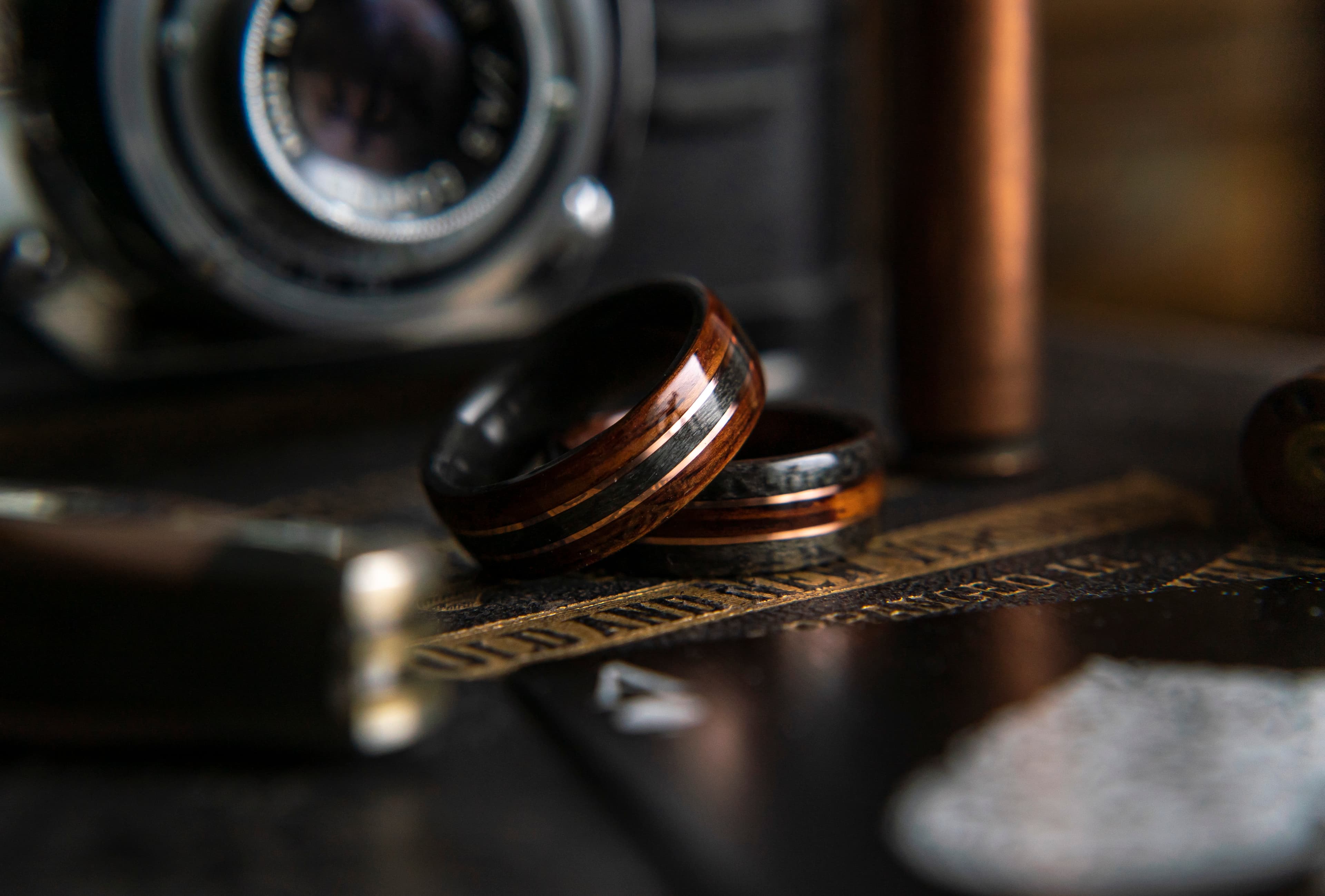
The problem with the solid ring
A solid wood ring is cut from a single piece: a stick is taken, a ring is sawed off, and it is sanded. The grain runs in one plane. When the finger swells with heat or exercise, the wood expands and the grain opens. That is the typical crack of a solid wood ring: it splits at the edge, not the center.
What the bentwood method is
The bentwood method does not cut the ring from a stick. It takes thin wood veneers, steams them until they bend, wraps them over a cylindrical core, and glues them. Then it is turned on the lathe to the desired width and profile. No CNC: the lathe is by hand.
The layers have the grain running in different directions. The tension that would open a crack in a solid ring is spread across the layers and the core: the ring flexes a little and returns, without opening.
Why it holds up to daily wear
- Hands and water: the clearcoat is waterproof for hands, shower, and pool. The wood is not exposed.
- Heat: the ring does not heat up like metal; wood does not hold heat.
- Impact: the outer layer scratches, it does not split. The clearcoat is touched, not the wood.
- Size: the ring is turned to measure; one half-size resize is free when the ring allows it.
What the bentwood method is not
It is not an "imitation" wood ring. It is not plastic with a wood finish. It is not a coating over metal. It is real wood, in layers, turned by hand. The difference shows in the grain: in a solid ring the grain runs in one plane; in a bentwood the layers can be read.
Where to see the process
The workshop is in Mérida, Yucatán. The method is the same in every piece: steamed veneers, wrapped over a core, turned by hand. The clearcoat is waterproof for daily wear. Price is on request.
Questions in this guide
No. It is real wood: thin steamed veneers, wrapped over a wood core and turned by hand. The core is also wood; there is no metal in the structure.
Because the grain is in layers, not a single ring. The tension that would open a crack in a solid ring is spread across the layers and the core. The ring flexes a little and returns; it does not open.
Sometimes. In woods with marked grain (koa, whisky-barrel oak, birdseye maple) the layers can be read on the profile. The clearcoat does not hide the wood; it leaves it visible.
Every ring in the workshop uses the bentwood method. There is no solid ring: no band is cut from a stick. It is the same process for every wood in the catalogue.