January 5, 2027
Premium wood rings: ebony, koa, bog oak, and more
The workshop's premium woods: ebony, koa, bog oak, and Santos rosewood. What makes them premium, how they look, and why they make sense on a ring.
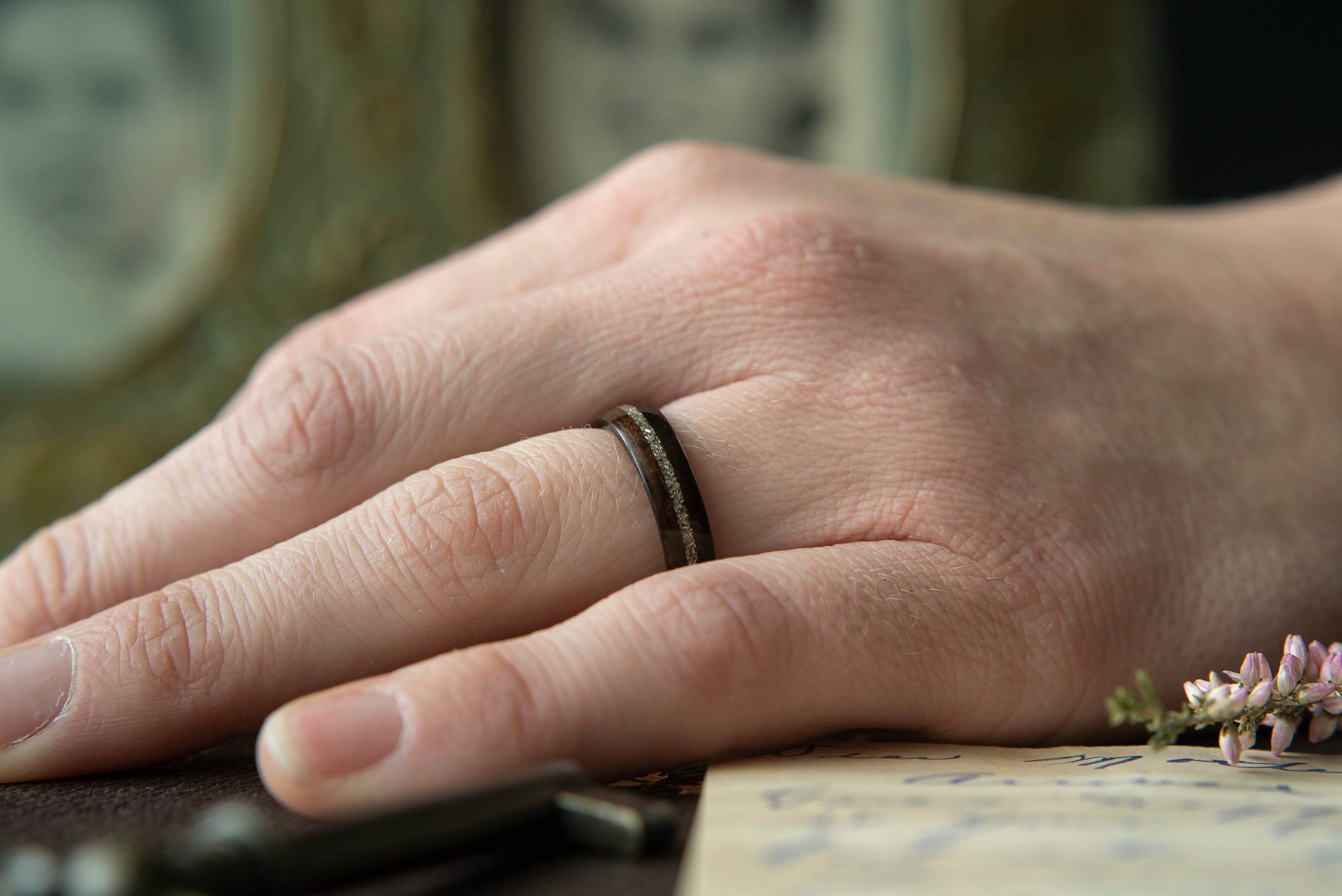
What makes them premium
Tres cosas separan a estas maderas del resto:
- Grain. The fiber is well marked and does not repeat: each ring is different.
- Tone. Ebony's black, koa's gold, rosewood's dark blue: tones you do not get from other species.
- Story. Bog oak was submerged for centuries. Koa grew on islands with its own climate.
How they show up
Cada madera premium se ve a su manera:
Ebony. Deep black, weight on the finger. The ring that needs no inlay.
Koa. Gold and cream, wavy grain. The island tone.
Bog oak. Dark gray with fine grain. The wood that already lived another life.
Santos rosewood. Blue-red, dark grain. The wood that names the brand.
Why they make sense
A premium ring is not chosen for the price: it is chosen for the grain and the tone. The clearcoat makes it wearable every day, and the half-size adjustment is included. The difference from a metal ring is that each piece is unique: the wood does not repeat.
Questions in this guide
A premium wood has a grain, tone, or story that makes it distinctive: denser, rarer, or harder to work. It is not just more expensive: it looks and feels different.
Ebony and Santos rosewood are the most in demand. Ebony for its deep black and weight; Santos rosewood for being the wood that names the brand. Koa and bog oak are the most surprising.
Yes, because the wood carries the work. Ebony needs no inlay: the material is the piece. The clearcoat gives it the sheen that makes it look finished. The exact price of each piece is in the store.