October 18, 2026
Wood rings vs. metal rings: which to choose in 2026
Wood against metal: weight, feel, maintenance, price, and daily use. The honest comparison for choosing between the two in 2026.
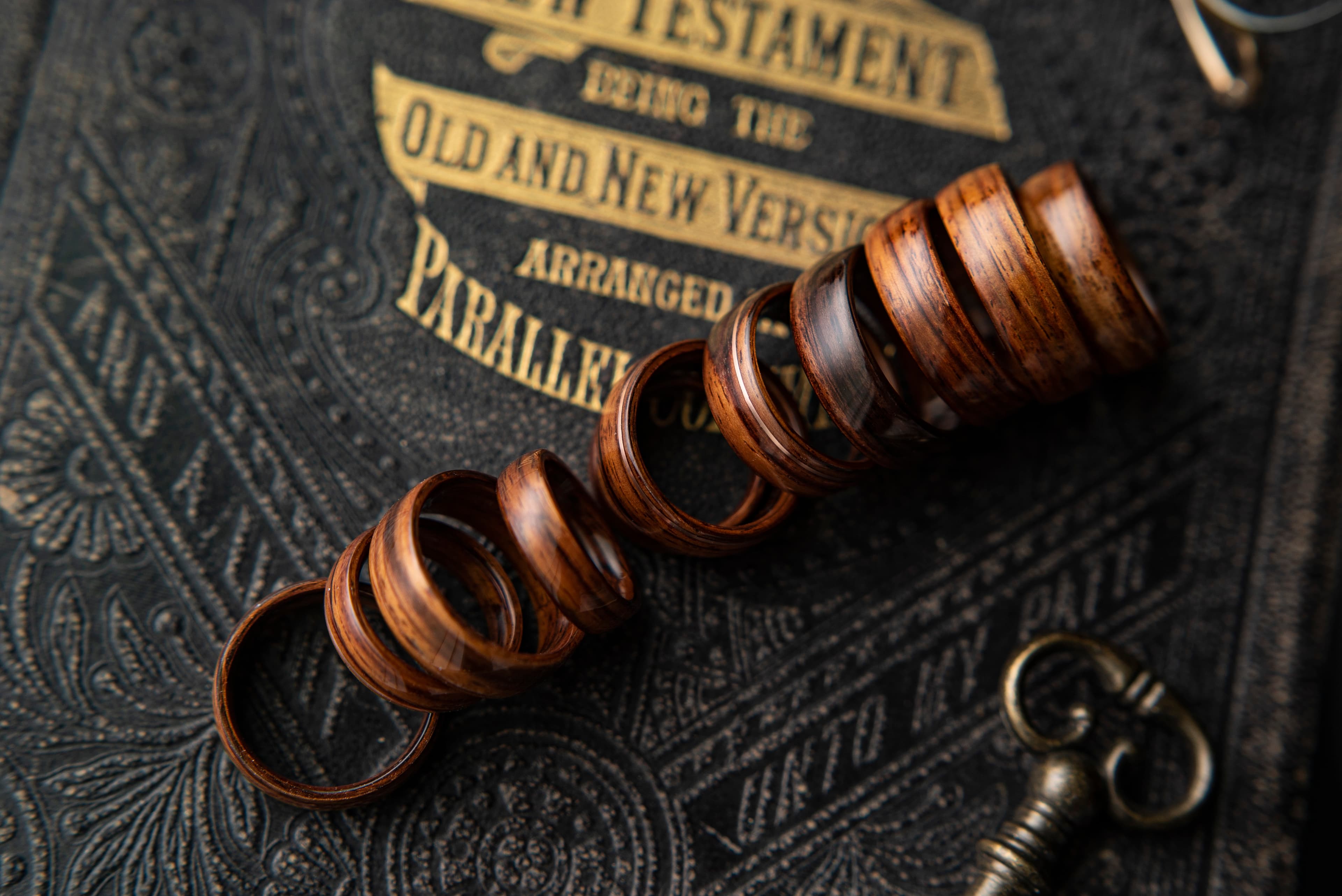
What metal does well
The metal ring has real advantages: it stretches and resizes, it takes impacts, it does not change tone, and it needs no maintenance. If the criterion is "the most durable thing that exists," metal is it. We are not going to say otherwise.
What wood does differently
- Weight: a wood ring weighs half or less than a metal one. On the finger, you notice.
- Temperature: wood does not hold heat. It does not warm in the sun or chill in the morning.
- Grain: every ring is unique. No two have the same pattern.
- Tone: wood gives tones metal does not: the gold of koa, the black of ebony, the warmth of rosewood.
Where wood loses
Seamos claros en lo que la madera no ofrece:
- It does not stretch: resizing is limited (there is one free half-size resize).
- The clearcoat wears with use: it needs care, it is not forever without maintenance.
- A hard impact on the clearcoat leaves a mark; on metal it dents, it does not stain.
How to decide
Ask yourselves three things. Do you care about weight and feel on the finger? Do you want a ring that looks like no one else's? Do you accept that the ring needs minimal care (cleaning, clearcoat from time to time)? If you answer yes to all three, wood is your ring. If not, metal is still the safest option.
Where to see both options
The workshop makes wood rings with the bentwood method: steamed veneers, wrapped over a core, turned by hand. The clearcoat is waterproof for daily wear. Price is on request. If you want to compare wood against wood, the wood guide helps.
Questions in this guide
It holds up to daily use: hands, shower, pool. The clearcoat protects it. What is not the same: a hard impact on the clearcoat can leave a mark, and resizing is more limited than a metal that stretches.
For the weight and the feel. The wood ring is lighter, it does not hold heat, and every grain is different. It is not that metal is "wrong": it is another texture.
For daily use, yes: the clearcoat handles water and hands. If the job involves chemicals or constant impacts, the best move is to take it off at that time.
Not always. The price depends on the wood, the inlay, and the size, and is on request. There is no "wood cheap, metal dear" rule: each piece is quoted separately.