October 5, 2026
Types of wood for men's rings: a material guide
A material guide for men's wood rings: Santos rosewood, grey maple, birdseye maple, ebony, koa, black walnut, mahogany and more, with tone, grain, and use.
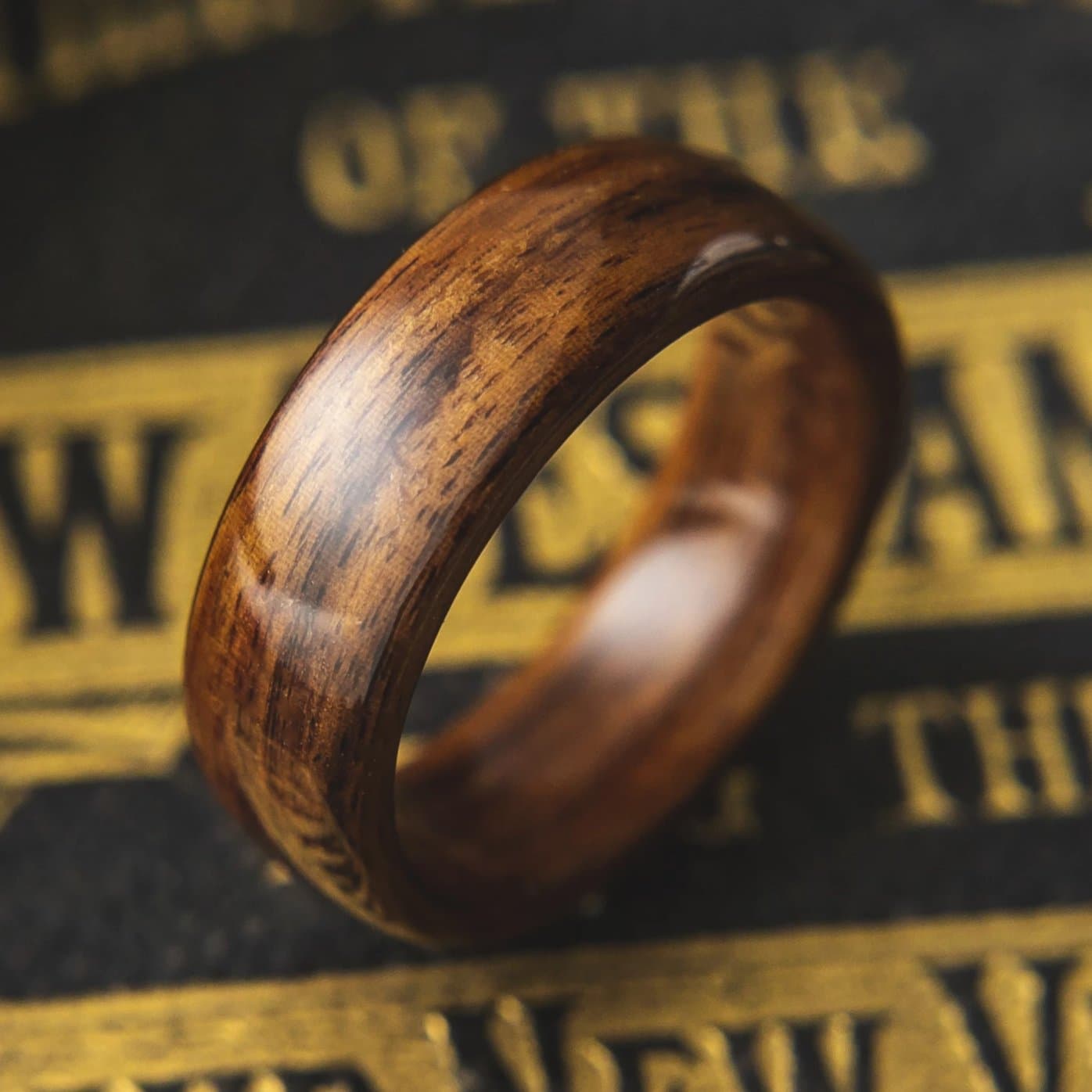
How to choose the wood for your ring
Wood defines 80% of how the ring will look. Before deciding, it helps to understand three things: the tone (light, medium, dark), the grain (even or expressive), and the character (classic, rustic, or dramatic). With that, choosing stops being a guess.
Wood is the material of the piece. The inlay, profile, and size personalize it; the wood defines it. This guide walks through the ten woods in the workshop catalog, from the most common to the most limited.
Dark woods: presence and seriousness
Santos rosewood. Dark reddish tone with fine, tight grain. It is the signature wood: balanced, easy to pair with copper or silver, and the most requested for matching couple bands. Alone, it is understated; with an inlay, it is the one with the most range.
Ebony. Deep black with a barely visible grain. It is the highest-contrast wood: with gold-tone inlays (copper, brass) or glass, the color pops. Without an inlay, it is pure presence. Its weight is noticeable when worn.
Black walnut. Dark brown, warm, medium grain. It is the "working" wood: it goes with everything, does not compete with inlays, and ages well. If you want an everyday ring that is not showy but noticeable, this is the starting point.
Light woods: light and grain
Grey maple. Light, greyish, with a very fine, even grain. It is the ideal canvas: with an inlay, the detail takes the lead; without one, it is understated and modern. Because of its neutral tone, it is the couple's wood that matches the most.
Birdseye maple. Light, with the characteristic "eyes": knots that look like small circles. It is the most expressive wood in the catalog. Those who choose it want it; those who do not prefer grey maple. With an inlay, the eye becomes the star.
Hawaiian koa. Golden with a contrasting, sometimes almost mottled figure. It brings the tropical character of Hawaii without being loud. It is a premium wood: supply is lower and the figure is more variable.
Woods with history and their own tone
Whisky-barrel oak. Toasted oak that already spent years inside a whisky barrel. Dark honey tone, a subtle scent that fades over time, and a story the ring carries with it. It pairs well with ebony and silver.
Mahogany. Red, warm, a classic of traditional woodworking. It is one of the most traditional Mexican woods for rings: medium to somewhat dark tone, straight and smooth grain. It works alone and with copper inlays.
Bog oak. The special case: oak submerged in European bogs for centuries. The water darkened and stabilized it without treatment. Dark grey to black tone, marked grain, very limited supply. It is the "one piece, one grain" wood: no two are the same.
Wood comparison table
A quick summary to decide:
- Santos rosewood — dark reddish tone · fine grain · balanced · the house wood.
- Grey maple — light tone · even grain · neutral · ideal for pairing.
- Birdseye maple — light tone · expressive grain · striking · the most distinctive figure.
- Ebony — deep black · barely visible grain · dramatic · maximum contrast.
- Hawaiian koa — golden · contrasting grain · premium · the most tropical.
- Whisky-barrel oak — dark honey · a story · rustic-warm · the one that tells.
- Black walnut — dark brown · medium grain · classic · the one that never fails.
- Purple heart — natural purple · medium grain · distinctive · the colorful one.
- Mahogany — warm red · straight grain · traditional · the Mexican classic.
- Bog oak — dark grey to black · marked grain · limited · the collector's pick.
The tone ranges from light (maples, koa) to dark (ebony, walnut, bog oak); the grain ranges from even (grey maple, mahogany) to expressive (birdseye, koa, bog oak). The middle ground is Santos rosewood, walnut, and mahogany: the default choice when there is no strong preference.
How to pair wood and inlay
An inlay does not compete with the wood: it frames it. Simple rules you see in the catalog:
- Dark wood (ebony, walnut, bog oak) + light inlay (silver, brass, glass): maximum contrast.
- Light wood (maples, koa) + dark or warm inlay (copper): the detail is underscored without shouting.
- Two woods + inlay: the darker wood leads, the lighter one balances, the metal punctuates.
A men's wood ring does not need to be showy to be memorable. It needs to be coherent: one wood, one grain, and if there is an inlay, one that completes it.
Questions in this guide
It depends on the tone you want: dark and serious (ebony, black walnut), warm and mid-tone (Santos rosewood, mahogany), or light and expressive (maples, koa). Every wood in the catalog is hardwood and suitable for daily wear.
No. Each ring uses a real piece of veneer, so grain and tone vary from ring to ring, even within the same species. The workshop shows you the available pieces before turning.
It is oak that was submerged in bogs for centuries, which naturally darkens and stabilizes it. That is why it is rare: supply is limited and each piece is selected individually.
The care is the same: avoid harsh chemicals and extreme heat. The difference is aesthetic — lighter woods show fine wear marks more, and the clearcoat gets touched up under the warranty.