October 24, 2026
Rings with silver inlay: the classic that never fails
Why silver is the workshop’s most understated inlay, how it pairs with ebony and oak, how to care for it, and what to expect from the shine over the years.
Why silver
Silver is the inlay that draws the least attention and the easiest to choose. It does not patina heavily like copper, it does not shine gold like brass, it does not change color. It is light, cool, and clean. If you want a wood ring with metal and you do not want the metal to be the star, silver is the way. The metal accompanies the wood, it does not cover it.
There are 3 silver pieces in the catalog. All are real wood, made to order in Mérida, Yucatán, with the bentwood method: steamed veneers, wrapped over a core, turned by hand, no CNC. We have made more than 15,000 rings; that volume of work is why the wood-to-silver bond holds up to daily wear.
Which woods it pairs with
Silver reads best where there is contrast. On dark wood it reads as a light line. On light wood it reads as a cool shine. The 3 in the catalog cover both ends:
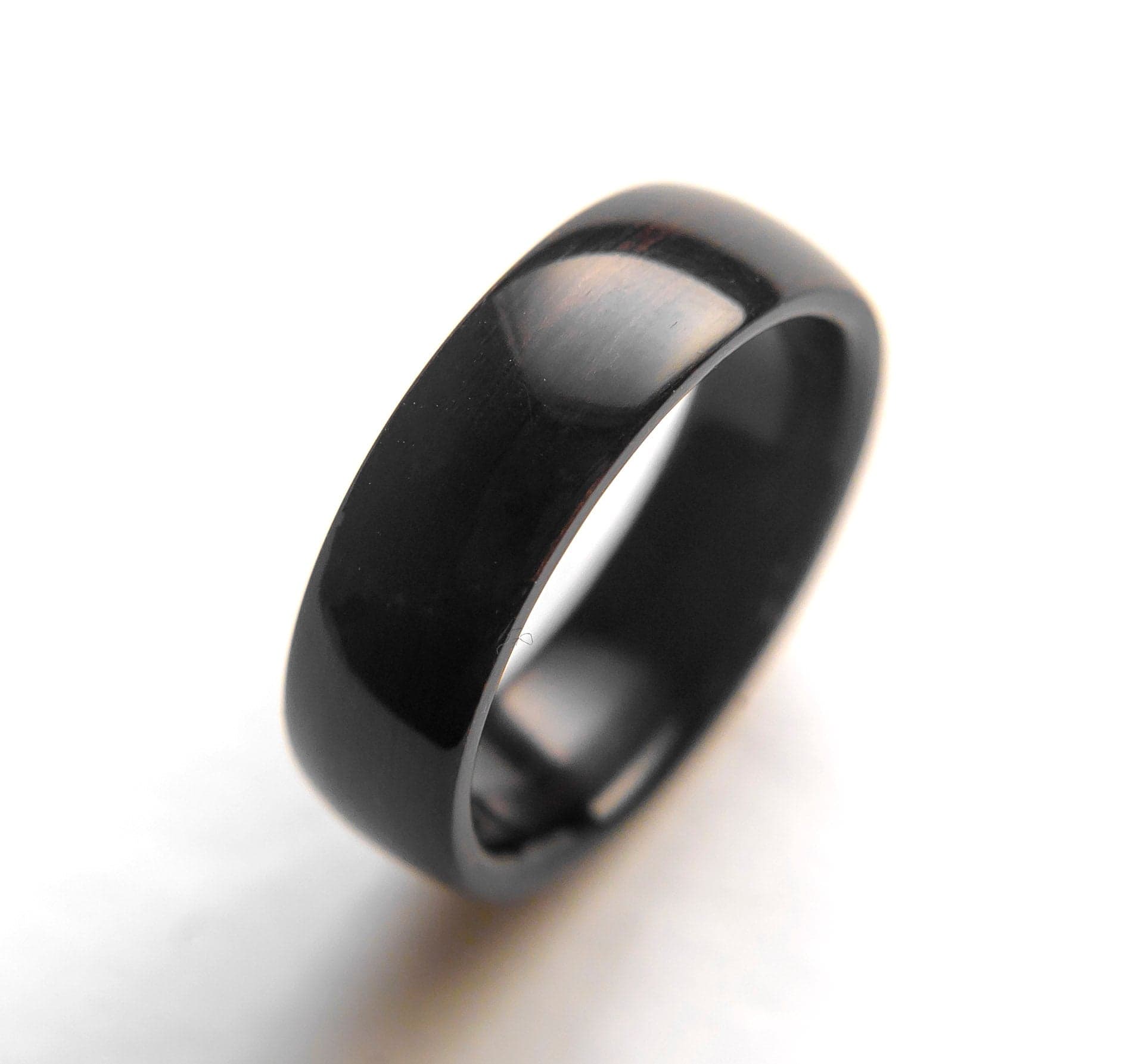
- Ebony + silver: strong contrast. The light line cuts the ebony’s black and reads from a distance.
- Barrel oak + silver: the oak’s smoky tone and silver’s cool shine go together without shouting.
- Santos rosewood + silver: the rosewood’s dark red warms the silver’s shine. It is the softest of the three combinations.
The wood is what decides how the silver reads. On ebony, silver looks like a blade. On oak, it looks like a line. On rosewood, it looks like a detail. If a specific wood interests you, write to us and we will tell you which options are in the workshop that day.
How silver is set in the ring
Silver is not glued: it is fitted. The workshop cuts a groove in the wood to the exact depth, heats the silver so it hugs the channel, and seals it with the clearcoat. The inlay sits flush: it neither lifts nor sinks. The piece is ready for daily wear from day one.
The bentwood method leaves the wood layers even, and the silver is set on that base. There are 3 pieces with silver. Some carry it as an outer line: visible from the face of the ring. Others carry it as an inner channel: visible only when the ring is on the hand or when it comes off. The ring width changes how it reads: at 6 mm the line is fine and subtle; at 9 mm it is wide and more noticeable. The size range is 6 to 12 in US scale.
Care
Silver takes care of itself. A dry cloth for dust and that is it. If the silver darkens over time, a silver polishing cloth or the workshop brings it back to its shine. The clearcoat protects the wood; if the clearcoat shows wear, the limited warranty covers the touch-up. Structural repair is quoted separately.
You do not need to remove it every night. You do not need to avoid water. The only thing worth keeping away from is perfume, cologne, and strong cleaners: those products speed up the patina. For everything else, the ring holds up.
Price on request
There is no posted price on this page. Each silver piece is quoted in MXN when silver is available, wood is chosen, and size and width are set. The price depends on the wood, the width, and whether the inlay is a line or a channel. Write with the size and the width, and the workshop gives you the exact price. No invented prices.
Questions in this guide
With sweat and air, silver can darken a little: that is called patina. It is not corrosion; it can be removed. A silver polishing cloth or the workshop brings it back to its shine. The clearcoat protects the wood, and the silver ages evenly.
Yes for daily wear: hands, shower, swimming. The clearcoat is waterproof and silver is not damaged by normal water. Remove it for long hot soaks, harsh chlorine, or acetone, and avoid strong perfumes on the inlay.
Ebony, barrel oak, and Santos rosewood. Ebony gives the strong contrast: a light line on a black background. Barrel oak balances the smoky tone. Santos rosewood adds warmth to silver’s cool shine. There are 3 silver pieces in the catalog.
Silver is softer than steel. With daily wear, small marks appear. That is not a flaw: it is part of how the metal ages. The clearcoat over the wood protects that part; the inlay shows its own history.
The inlay is sterling silver, not a decorative alloy. The workshop works with solid silver for the channel or the inner line. The rest of the ring is real wood, made to order with the bentwood method in Mérida, Yucatán.