January 17, 2027
How we choose the wood for each ring: the process behind the selection
Before bending, the wood passes through several checks: species, tone, grain, and moisture. This is how each ring's wood is chosen in the workshop.
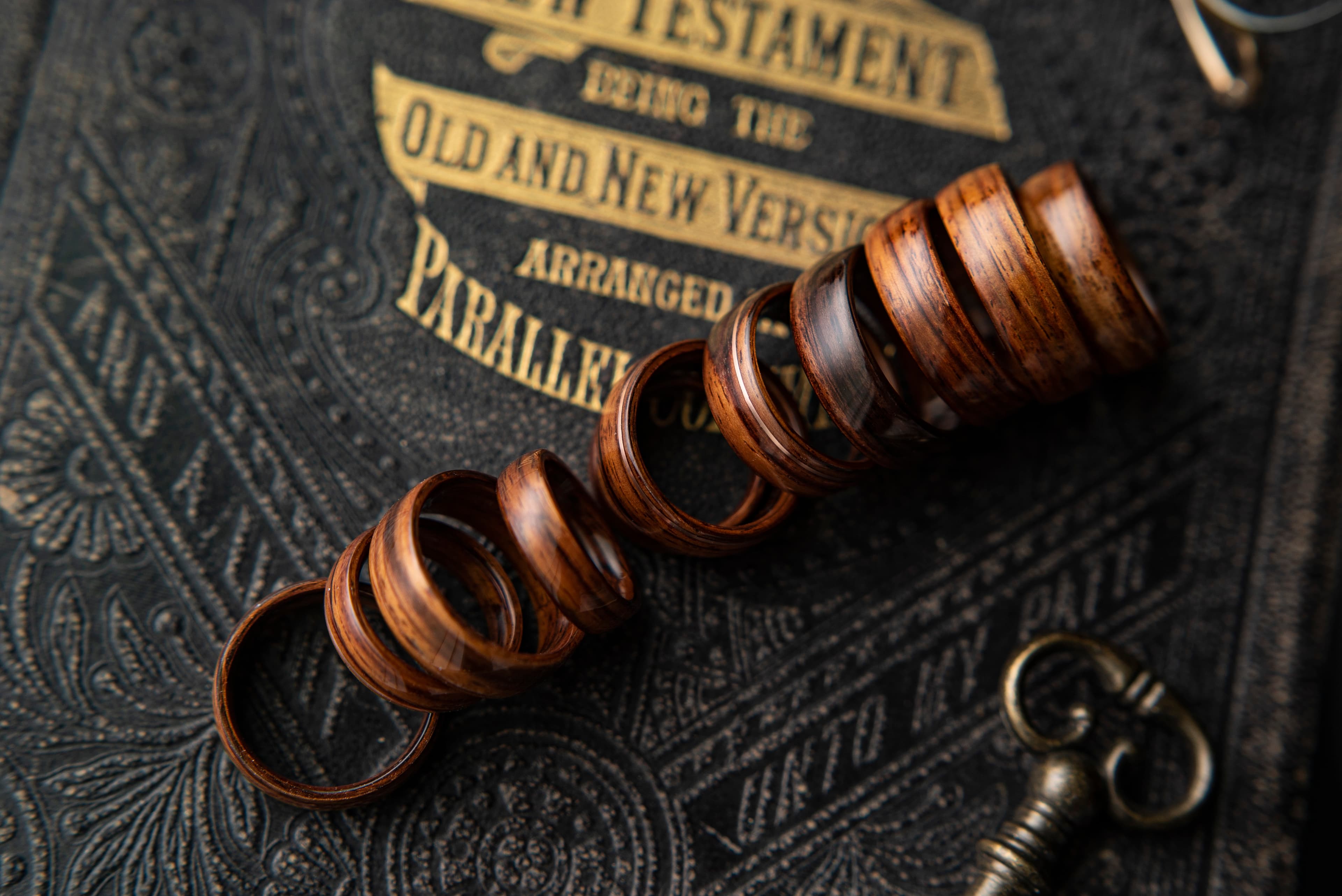
Before bending, it is checked
The ring is decided before the veneer touches the steam. There are several checks the wood must pass to reach the lathe:
Species. Confirming it is the wood you choose: Santos rosewood, ebony, koa, maple. No species that does not bend well is worked.
Moisture. The wood must be seasoned. Wet wood warps as it dries and the ring ends up twisted.
Grain. The grain must be continuous and well marked. A broken or weak grain does not bend with the same stability.
Tone. The tone must be the one of the species. A false tone is usually treated or low-quality wood.
Why they do not work without checking
A wood ring bent on un-checked wood has three risks: it warps as it dries, flexes poorly when bent, and looks bad in the finished ring. The checks are what avoid those three risks. They are not an extra step: they are what make the ring stable.
The selection you see in the ring
What the customer does not see is the inspection. What they do see is the result: a ring that does not warp, flexes well, and carries the grain of the species they chose. Wood selection is not a workshop formality: it is the reason the ring looks the way it does.
Questions in this guide
By species, tone, grain, and moisture. They check the wood is dry, the grain is continuous, and the tone matches the species. Only then does it move to bending.
Moisture. Wood that still has moisture does not bend well: it warps as it dries. The workshop's wood is seasoned before any ring.
Because the grain defines how the finished ring looks and how it flexes when bent. A continuous, well-marked grain bends with more confidence and looks better in the ring.