December 26, 2026
Wood ring and sustainability: where the wood comes from and how it is worked
The wood behind the rings: where it comes from, how it is selected, the bentwood method, and why a hand-made wood ring is a more sustainable option than industrial jewelry.
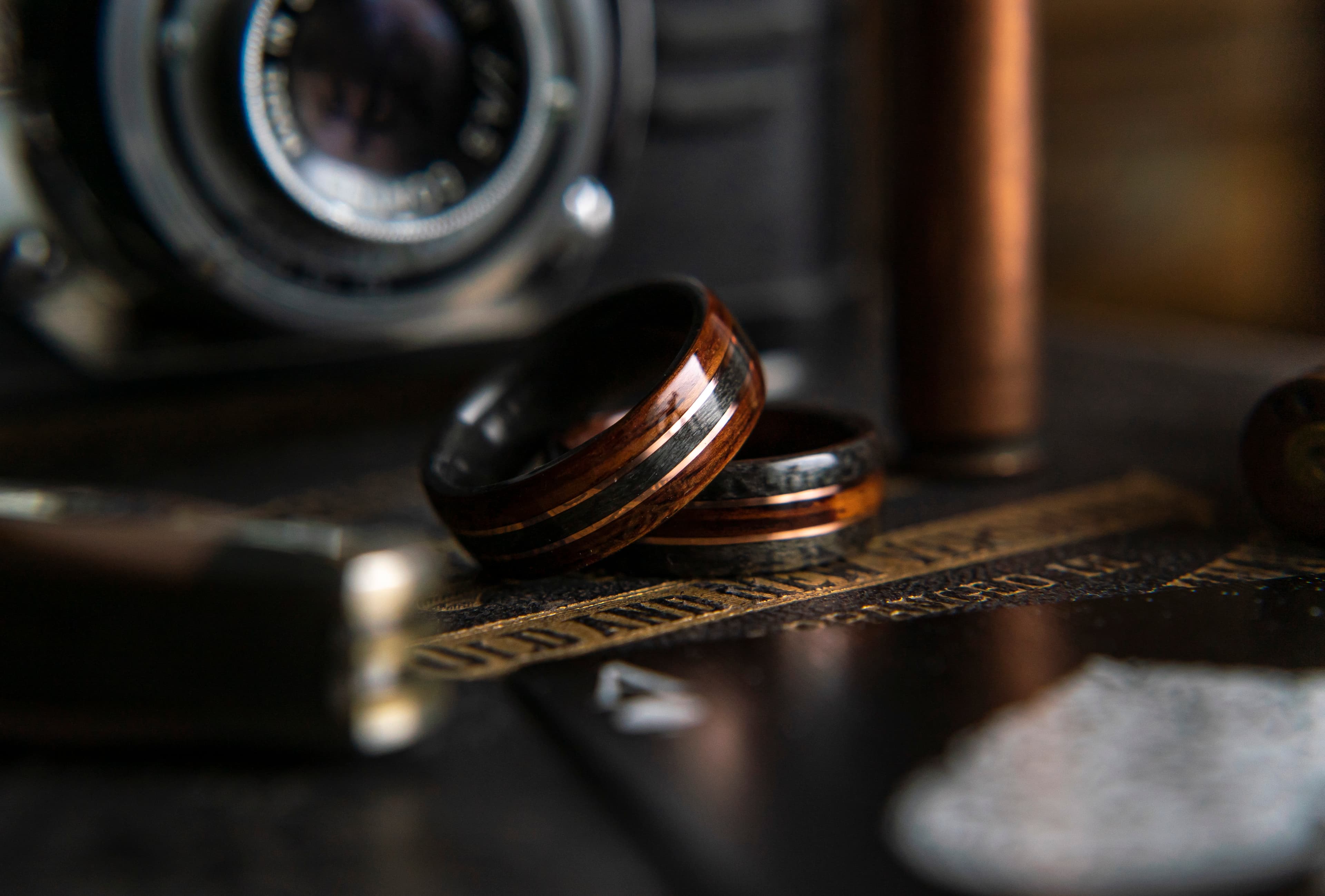
Where the wood comes from
El taller no tumba árboles. La madera llega de tres formas:
- Responsible sawmills: woods like rosewood, ebony, koa, and maple that arrive as already-processed boards.
- Recovery: whisky barrel oak is oak that already served its life in the barrel. No trees are felled.
- Bog wood: bog oak is wood sunk for centuries and recovered from peat bogs. It is not freshly cut wood.
The bentwood method and the material
The bentwood method uses thin wood veneers, not a solid block. That means less material per ring and less waste. The veneers are bent over steam, wrapped around a core, and turned by hand. No molds, no mass-production waste. Each piece is adjusted to the exact finger size.
The clearcoat and the impact
The clearcoat is applied in thin layers and left to cure. No strong solvents or chemical residues. The workshop uses small amounts and works in a controlled space. The clearcoat is the layer that makes the ring waterproof for daily use; without it, the wood could not handle water or sweat.
What the ring brings
- Real wood: no resin, no plastic, no industrial plywood.
- Hand-made: every piece comes off the lathe in the Mérida workshop.
- Less material: thin veneers, not solid blocks.
- Recovery: barrel oak and bog oak are wood that already lived.
- Limited lifetime clearcoat warranty: the ring is designed to last, not to be replaced.
The order
Write on WhatsApp or email with the wood, the width, and the size. The workshop confirms the quote and the lead time in writing. Price on request.
Questions in this guide
From responsible sources: sawmills, whisky barrel recoveries, bog oak, and suppliers that do not indiscriminately log. The workshop does not fell trees: it buys already-processed or reclaimed wood.
Yes: it is oak that already served its life in the whisky barrel and is recovered to become a ring. No trees are felled for it.
Yes, for two reasons: less material is used (thin veneers instead of a solid block) and there is no waste from molds. Each piece is turned by hand and adjusted to the exact size.
The clearcoat is applied in thin layers and left to cure. No strong solvents or chemical residues. The workshop uses small amounts and works in a controlled space.